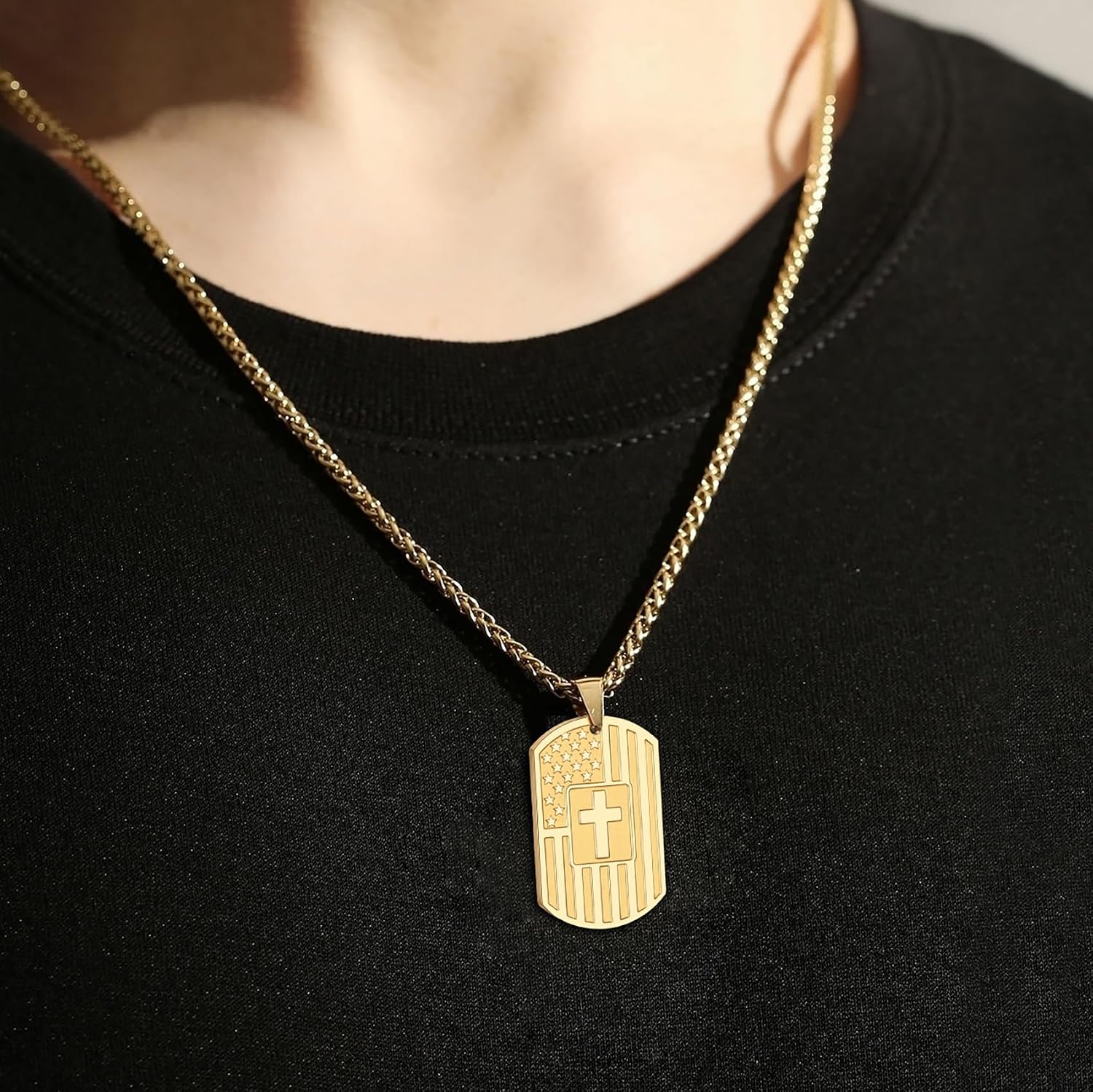
Few gifts carry as much weight as the one you give someone at a faith milestone. Baptism, confirmation, and First Communion are religious ceremonies that mark a person’s formal entry into — or deepening commitment to — their Christian faith. (Baptism is a water ceremony welcoming someone into the church; confirmation is a later rite, usually for teenagers, affirming that faith as their own; First Communion is the first time a Catholic or some Protestant child receives the Eucharist, or communion bread and wine.) These are once-in-a-lifetime moments, and the gifts that show up for them tend to be kept for decades. A well-chosen scripture gift — whether that’s a keepsake Bible, an engraved pendant, or a framed verse print — becomes part of the story of that day. This guide will walk you through the decisions you’ll actually face: which occasions call for what level of investment, which products hold up over time, and where the tradeoffs live between a $14 bookmark and a $195 gold pendant.
Understanding the Occasion Before You Shop
The single biggest mistake gift-givers make with milestone occasions is buying the same category of gift regardless of the ceremony. These three events — baptism, confirmation, and First Communion — are emotionally and theologically distinct, and that distinction should shape your choice.
Baptism gifts often go to infants or young children, which means the gift has to survive being stored for years before it’s meaningful to the recipient. The parents are also a secondary audience here. A beautiful keepsake Bible with a personalized inscription or an engraved silver cross ornament serves both purposes: it’s a tangible record of the day, and it will be handed to the child when they’re old enough to understand it. For adult baptisms — which are increasingly common across evangelical and nondenominational churches, per Christianity Today’s feature on milestone gifting — you can go straight to something the person will use immediately, like a study Bible or a leather prayer journal.
Confirmation recipients are typically teenagers (roughly ages 13–17 in most Catholic and mainline Protestant traditions), which changes the calculus significantly. This age group benefits from gifts that feel like they’re being treated as adults: a quality journaling Bible, a scripture-engraved piece of jewelry they’ll actually wear, or a personalized devotional that doesn’t feel like it was picked out for a ten-year-old. Confirmation is also an intellectually significant milestone — the recipient is affirming their own belief — so gifts that invite reflection or study tend to land better than purely decorative pieces.
First Communion is most common in Catholic and some Episcopal traditions, and it almost always involves young children (typically ages 7–9). The visual and symbolic register here is more traditional: crosses, white and gold color palettes, and classic verse imagery like Psalm 23 or John 3:16. This is also the occasion where a rosary or a saint’s medal might be appropriate — items that are distinctly Catholic and would not automatically suit a Protestant ceremony. Publishers Weekly’s annual religious gift market overview notes that First Communion remains one of the highest-volume seasonal peaks in religious gifting, typically concentrated in May.
The Price-Point Decision Framework
Here’s a simple structure for thinking about budget — not because the amount spent determines the gift’s meaning, but because it determines the craftsmanship level and longevity you can realistically expect.
By the numbers:
| Budget range | What you can expect | Best for |
|---|---|---|
| $14–$35 | Mass-market devotionals, keepsake bookmarks, scripture mugs, printed cards | Classroom gifting, large group events, secondary gifts |
| $40–$90 | Bonded-leather Bibles, devotional sets, simple sterling silver jewelry | Friends, coworkers, Sunday school classes of one |
| $100–$200 | Genuine leather Bibles with personalization, vermeil or 14k gold jewelry, curated gift boxes | Close family, godparent gifts, adult milestones |
| $200–$400+ | Heirloom Bibles, solid gold jewelry, hand-lettered art, personalized leather journals | Grandparent-to-grandchild, milestone investment pieces |
The tradeoff that matters most in this category is bonded leather vs. genuine leather for Bibles. Bonded leather (sometimes called “reconstituted leather”) is made from leather scraps pressed together — it looks good in photos but tends to crack or peel within five to ten years of regular use. Genuine leather, top-grain leather, and full-grain leather are cut from a single hide and will outlast the bonded version by decades with minimal care. If someone is going to use this Bible regularly, the jump from a $45 bonded-leather edition to an $85–$120 genuine leather edition is worth every dollar.
Smyth-sewn binding is another term worth understanding. Bibles (and journals) are assembled in one of two ways: pages are either glued to the spine (adhesive binding, which eventually separates) or sewn together in signatures and then glued (Smyth-sewn). A Smyth-sewn Bible lies flat when open, holds up to decades of daily use, and won’t shed pages. Crossway’s editorial notes on their ESV Legacy Bible specifically highlight Smyth-sewn construction as a differentiator in the heirloom-tier segment — and at $280, it should be.
Category-by-Category Recommendations
Bibles and Devotionals
For infant baptism, a children’s story Bible with space for an inscribed dedication page is the classic choice — and genuinely useful when the child grows into it. For confirmands and adult baptism recipients, a journaling Bible (which has wide margins for notes and reflection) tends to be the gift reviewers and parents most consistently recommend for sustained use. DaySpring’s gift category descriptions note that journaling Bibles have been among their fastest-growing segments since 2023.
If you’re investing at the heirloom level, Crossway’s ESV Legacy Bible is the benchmark for English-language Protestant gifting. It’s a large-format, genuine leather edition with gilded page edges (those are “art-gilt” edges — gold applied to the page ends so the closed Bible has a gold finish), ribbon markers, and Smyth-sewn binding. Owners consistently describe it as something they expect to pass down.
For Catholic recipients, translation matters: the New American Bible Revised Edition (NABRE) is the translation used in Catholic liturgy, so gifting it signals that you’ve paid attention to the recipient’s tradition. A Protestant-focused gift-giver can note this as their first decision point — not because other translations are wrong, but because receiving the translation you actually hear at Mass carries additional meaning.
Scripture Jewelry
This is the category where the gap between mass-market and premium is most visible to the naked eye. Vermeil (pronounced “ver-MAY”) means sterling silver with a thick layer of gold plating — it’s durable, real metal, and much more affordable than solid gold while looking nearly identical. Caitlyn Minimalist’s scripture pendants in vermeil run roughly $60–$95 and have accumulated strong reviewer consensus for lasting wearability. Their solid 14k gold versions run $150–$195 and are the appropriate choice when you want something genuinely heirloom-grade.
For confirmation gifts specifically, a scripture pendant with the confirmand’s chosen saint’s name (for Catholic confirmations, where recipients often take a saint’s name) or a verse meaningful to them is a more personal choice than a generic “faith” pendant. Jewelry that requires a conversation to choose — “what verse would you want engraved?” — tends to be remembered longer than jewelry chosen entirely by the giver.
For young First Communion recipients, sterling silver is more appropriate than gold at most price points — it’s durable, widely accepted as a “real” gift material, and less likely to overwhelm a child-sized neck.
Art Prints and Framed Scripture
A giclée print (pronounced “zhee-CLAY”) is a high-quality inkjet reproduction made with archival inks on archival paper — the kind that, when framed behind UV-protective glass, can last 75+ years without fading. This is the format independent Christian artisans use when they want their scripture letterpress or watercolor prints to function as heirlooms rather than posters.
For milestone occasions, a custom giclée or letterpress print of the recipient’s baptism or confirmation date paired with a meaningful verse is a gift with a specificity that mass-market options can’t match. Expect to pay $60–$150 for a quality 8x10 or 11x14 archival print from an independent Christian artisan; framing adds cost but also signals that you’ve already done the work of making it gift-ready.
Navigating Denominational Appropriateness
This is the question most gift guides skip, and it matters more than almost any other factor.
Catholic recipients: Rosaries, saint medals, the NABRE Bible translation, and First Communion-specific imagery (chalice, host, white dove) are all appropriate and often expected. A beautifully packaged rosary in a keepsake box is a $25–$80 gift that will genuinely be used. Generic Protestant-coded gifts — a “quiet time” devotional journal, a praise-and-worship-adjacent product — may feel slightly off-register without being wrong.
Mainline Protestant recipients (Lutheran, Methodist, Presbyterian, Episcopal): These traditions span a wide range from liturgically formal to relatively casual. A quality Bible in a respected translation (NIV, ESV, NRSV), a devotional from a respected author in that tradition, or scripture-verse jewelry with a non-denominationally-coded verse (Jeremiah 29:11, Psalm 23, Romans 8:28 are universally recognized) will land appropriately.
Evangelical and nondenominational recipients: This is the broadest audience and the most flexible in terms of product range. Journaling Bibles, devotionals, praise-oriented art prints, and scripture jewelry all translate well. If you’re uncertain, a gift receipt or a personalized note explaining why you chose the specific verse goes a long way.
The Decision Rule
If you’re standing at the decision point right now, here’s the framework:
- If the recipient is a child under 12: prioritize keepsake durability and parental usability. A quality children’s Bible with a personalized inscription, a silver cross, or a framed baptism verse. Budget: $30–$90.
- If the recipient is a teenager at confirmation: treat them like an adult. A journaling Bible or genuine leather devotional Bible, or a personalized piece of jewelry they’ll actually wear. Budget: $60–$150.
- If the recipient is an adult: match investment level to relationship closeness. Acquaintance = $40–$80 quality devotional or jewelry. Close family or godparent = $150–$350 heirloom Bible, gold jewelry, or curated gift box.
- If you’re buying in volume (a Sunday school class, a confirmation class of 20): DaySpring’s bundled devotionals and keepsake sets in the $18–$35 range are the honest answer — they’re appropriately crafted for the price and won’t feel cheap if chosen with intentionality.
The most important thing isn’t hitting a price target. It’s the ten seconds it takes to add a handwritten note explaining which verse you chose and why — that’s what gets remembered at every price point, from a $14 bookmark to a $350 journal. The gift marks the milestone. The note makes it personal.