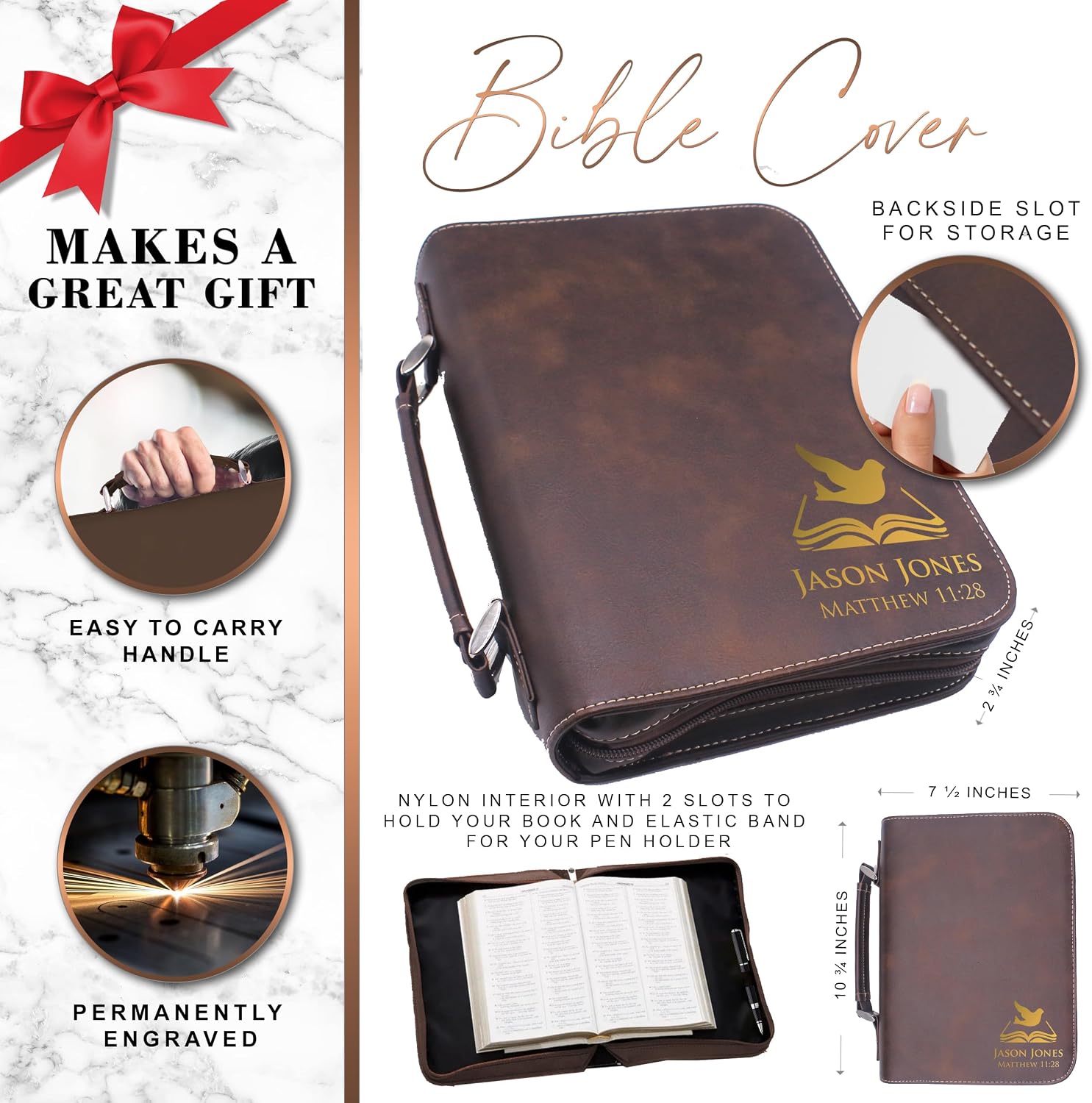
A Bible cover — also called a Bible case or Bible carrier — is exactly what it sounds like: a protective sleeve or zip-around case designed to hold a Bible, usually with pockets for a pen, notes, and small accessories. They range from simple vinyl pouches to hand-stitched leather folios. What separates an ordinary one from a truly meaningful gift is personalization: a name, a date, a short scripture reference, or initials stamped, engraved, or debossed (pressed into the material so it reads as a slight indentation rather than raised text) directly onto the cover. That small detail transforms a functional object into a keepsake. If you’re shopping for a baptism, confirmation, graduation, wedding, ordination, or any milestone occasion where faith is at the center, understanding how personalization works — and where your dollars actually go — will help you choose with confidence. This guide walks you through the full landscape, from a $25 budget pick to a $180 heirloom leather folio, with honest tradeoffs at every level.
Why Personalization Raises the Stakes (and the Scrutiny)
Here’s the first thing experienced gift-givers learn: personalization is unforgiving. A standard Bible cover that disappoints can be exchanged. One with a name stamped on it cannot. That asymmetry changes the decision calculus in two important ways.
First, you need to get the details right before you order. Most personalized Bible covers require a 5–14 business day production window because each piece is made or finished to order. If you’re working toward a confirmation Sunday or a graduation ceremony, Christianity Today’s gift coverage consistently emphasizes building in at least three weeks of lead time for any engraved or embossed item. Missing the occasion with a late arrival undercuts the entire emotional weight of the gift.
Second, the quality of the base material matters more than most buyers realize. Personalization done well draws attention to the cover, which means a beautiful name stamp on a flimsy vinyl surface still looks and feels cheap. The Gospel Coalition’s gift guides for milestone occasions make this point clearly: the perceived value of a personalized item is anchored to the tactile quality of the object, not just the customization itself. Before you lock in a price point, handle (or read detailed owner reviews about) the base material — vinyl, bonded leather, genuine leather, or full-grain leather.
The Material Ladder, Explained Simply
| Material | What It Is | Price Range | How It Ages |
|---|---|---|---|
| Vinyl / synthetic | Plastic-based, wipe-clean | $15–$35 | Peels or cracks within 2–4 years |
| Bonded leather | Leather scraps pressed onto backing | $30–$70 | Flakes over time; looks good short-term |
| Genuine leather | Real leather, lower-grade split | $60–$120 | Durable; softens with use |
| Full-grain leather | Top layer of the hide, highest quality | $100–$200+ | Develops a patina; lasts decades |
This matters because milestone gifts are supposed to outlast the milestone. A confirmation gift ideally stays with someone through their twenties. A wedding Bible cover might pass to the next generation. Bonded leather (sometimes marketed as “vegan leather” or “eco leather”) is the tier where buyers most commonly feel deceived — it looks convincing in product photos and feels fine on arrival, but owners consistently report peeling and flaking within two to three years of regular use.
Matching Price Point to Occasion Weight
Not every milestone carries the same emotional gravity, and your budget should reflect that honestly. Here’s a practical decision frame:
$20–$45: Everyday Sunday school or VBS recognition gifts. At this tier, vinyl or entry-level bonded leather is standard. Personalization is typically a heat-transfer print rather than debossing, which means it may fade. This is perfectly appropriate for a children’s church volunteer appreciation gift or a Sunday school attendance award — occasions where the gesture matters more than the longevity of the object. Don’t apologize for this tier; just deploy it correctly.
$50–$90: Confirmation, first communion, and youth graduation gifts. This is where genuine leather enters the picture. At this price, you can expect decent debossed or foil-stamped personalization that will hold up for years. Reviewers across multiple Christian gift retailers note that this range offers the best value-to-quality ratio for teen milestone gifts — durable enough to feel serious, accessible enough to buy without agonizing. Crossway’s Bible buying resources note that most standard-size Bibles (the most common gift at confirmation) fit cases designed for a 6” × 9” footprint, so always verify the Bible’s dimensions before ordering a case.
$100–$180: Adult milestone gifts — ordinations, adult baptisms, ministry anniversaries. Full-grain leather cases with hand-stitched edges, brass zippers, and deep debossing fall here. Artifact Uprising’s approach to personalized leather goods — while focused on photo products rather than Bible cases specifically — documents the craft standard that buyers at this tier expect: clean tooling, consistent stitching, and personalization applied with a die press rather than a laser or heat transfer. At $100+, buyers are entitled to ask the retailer directly: “Is this full-grain leather, and is the personalization debossed or printed?” Those two questions will immediately reveal whether the price is justified.
By the numbers: The average debossed leather Bible cover from a specialty Christian retailer runs $75–$130 with personalization included. Upgrading from bonded to full-grain leather typically adds $40–$60 to the base price. Rush production (under five business days) adds $15–$25 at most vendors. Plan for a $95–$160 all-in budget for a quality personalized adult milestone cover with standard shipping and no surprises.
Denominational Fit: What Works Across Traditions
One question this site’s readers raise constantly: “I don’t know what church they attend — will this work?” The good news is that Bible covers are among the most denomination-neutral gifts in the faith-gift category. A leather case that holds a standard Protestant study Bible also holds a Catholic New American Bible or a nondenominational journaling Bible. The object itself carries no theological content.
A few practical notes for cross-tradition giving:
- Size is the real variable. Catholic Bibles (especially those with deuterocanonical books, sometimes called the Apocrypha) tend to run slightly thicker than Protestant editions at the same trim size. If you know the recipient uses a Catholic edition, add 0.5” to your thickness estimate when checking case specifications.
- Avoid covers pre-printed with denomination-specific imagery (a cross and flame for Methodist, a chi-rho for Catholic, etc.) if you’re unsure of the recipient’s tradition. Plain or minimally decorated covers with the recipient’s name are universally appropriate.
- Zipper vs. magnetic closure. The Gospel Coalition’s gift content observes that zipper closures are preferred by regular Bible study participants who carry their Bible daily, while magnetic snap covers are popular for pew or church-bag use. When in doubt, a zipper is the more versatile choice.
Personalization Options: What Each Method Actually Delivers
This is where comparison matters most, and where marketing language can mislead. There are four primary personalization methods used on Bible covers:
Debossing presses heated metal dies into the leather, creating a permanent indented impression. It’s the gold standard for leather goods — clean, durable, and elegant. If you’re spending over $75, this is what you should expect.
Foil stamping adds a metallic (gold, silver, rose gold) layer to the debossed impression. Owners of foil-stamped covers report that the foil can wear at contact points — the corners of letters, for example — over five or more years of heavy use. For occasional-use gifts, this matters less. For a daily-use ministry Bible, debossing without foil may age more gracefully.
Laser engraving is common on synthetic and lower-grade leather covers. It burns the surface rather than pressing it. The result is sharp and precise on first receipt but reviewers consistently note a slightly scorched texture and color that can look dated over time. At the $30–$60 tier, this is standard and acceptable. At $100+, it’s a quality signal worth questioning.
Heat-transfer printing is essentially a sticker-style application. It’s the least durable of the four and appropriate only at the entry-level price point. If a vendor doesn’t specify their method, this is usually what you’re getting.
The Decision Framework: If X, Then Y
If you’re choosing a gift right now and want a clean decision rule, here it is:
-
If the occasion is a child’s milestone (first Bible, baptism under age 12, VBS recognition): Choose the $25–$45 range, prioritize a fun color or design, and don’t overthink the material. The name on the cover matters; the leather grade does not.
-
If the occasion is a teen confirmation, bar/bat mitzvah adjacent, or youth graduation: Spend $60–$90, insist on genuine leather (not bonded), and verify that debossing is included — not just a printed name. This is the range where a little extra scrutiny pays off.
-
If the occasion is an adult milestone — ordination, adult baptism, 25th ministry anniversary, pastoral installation: Budget $120–$180 for full-grain leather with hand-stitched edges and die-pressed debossing. This is a gift meant to outlast a career. The craftsmanship signals the weight of the occasion.
-
If you’re buying in volume (church confirmation class, ministry team appreciation): Drop to the $35–$55 range per unit, use a single consistent design with each person’s name, and order all units together for consistent personalization quality. Most specialty vendors offer a 10–15% discount at quantities of 10 or more.
-
If you genuinely don’t know the recipient’s Bible size: Choose a large-print or “standard” size case (typically fits a 6.25” × 9.25” Bible) and include a gift note acknowledging that the cover may need to be exchanged for a different size. A thoughtful note de-awkwards the exchange entirely.
Personalization doesn’t require a large budget to be meaningful — but it does require matching the right method, material, and price tier to the moment you’re honoring. A name pressed into full-grain leather for an ordination gift will still look dignified in twenty years. A heat-transferred name on vinyl is a lovely gesture for a nine-year-old’s first Bible. Neither is wrong. The only mistake is deploying them in each other’s occasions.