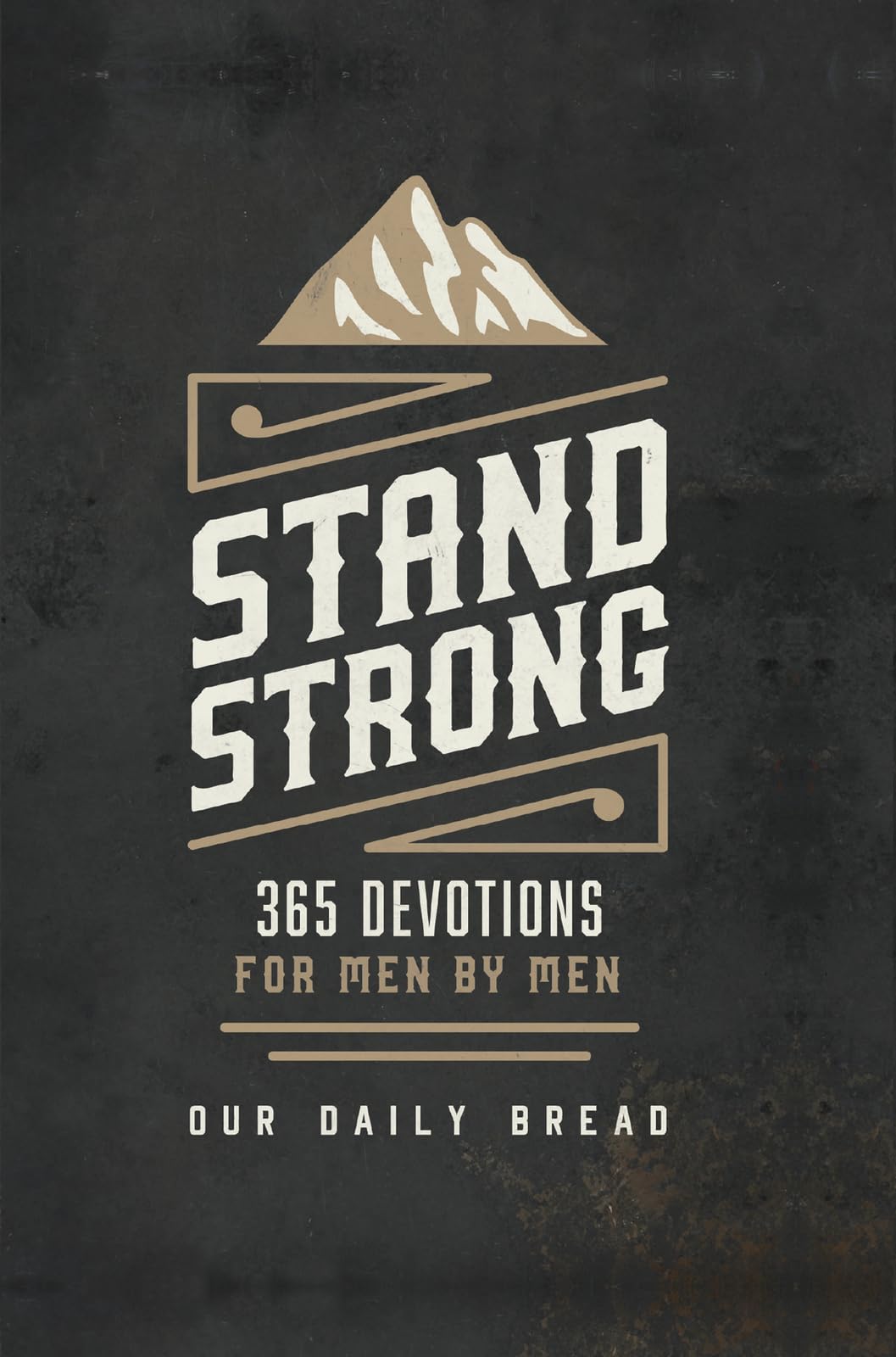
You know the type. He’s faithful, steady, the guy who shows up early to set up chairs and stays late to fold them. Ask him what he wants for his birthday or Father’s Day and he’ll say, “Nothing, really — I’m good.” Getting a meaningful gift for that man is genuinely hard, and a devotional — a short daily reading book designed to help someone reflect on faith, prayer, or scripture — seems like it should be the obvious answer. The problem is that most devotionals aimed at men feel like they were written for a motivational poster, not for a real person with a complicated week. This guide is here to help you cut through that noise. By the end, you’ll know exactly what separates a devotional that collects dust from one that gets dog-eared, and you’ll have clear picks at three different price points so you can match the gift to the moment.
Why Most Men’s Devotionals Fail (And What to Look for Instead)
Let’s start honest: the men’s devotional shelf at most Christian bookstores is crowded with books that promise to help men be “warriors,” “champions,” or “legends” — and the men who actually read deeply tend to find that framing exhausting rather than inspiring. According to Christianity Today’s “State of Men and the Church” 2024 survey report, men who disengage from regular faith practices most often cite feeling like church content “doesn’t take them seriously” rather than any theological objection. That’s a formatting and tone problem, and it shows up in gifts, too.
So what does work? Across reader reviews and pastoral recommendations, a few patterns emerge consistently:
Short, self-contained entries. A man who commutes, works with his hands, or has young kids at home is not reading four pages before bed. The devotionals that stick tend to offer a single scripture passage, two to four paragraphs of reflection, and one concrete question or prayer. That’s it. He can finish it in six minutes and feel like he actually completed something.
Honest writing, not cheerleading. The Gospel Coalition’s article “Why Men Stop Reading: A Pastoral Perspective” notes that men — particularly those in middle age or navigating loss — are far more likely to return to a book that acknowledges difficulty than one that promises breakthrough. Lament, doubt, and the weight of responsibility are not bugs in a man’s spiritual life; they’re the terrain a good devotional walks with him.
Durability signals craftsmanship. This one is practical: if the book feels flimsy, it communicates that the gift was an afterthought. Men who keep devotionals on a nightstand or in a truck’s center console notice when a cover holds up. Lay-flat binding — where the book opens flat without cracking the spine — is a small detail that readers mention consistently in long-term reviews.
Denominational range matters less than you’d think. Most mainstream men’s devotionals draw from broadly Protestant, nondenominational evangelical traditions. Catholic readers will want to look specifically for imprimatur-bearing titles (that’s a church approval mark printed inside the front cover), but for the vast majority of Protestant and nondenominational recipients, the books recommended below cross over cleanly.
By the Numbers
| Price range | What you’re getting | Best occasion |
|---|---|---|
| $14–$28 | Mass-market paperback, 90–365 day format | Sunday school teacher, coworker, casual gift |
| $45–$80 | Hardcover or premium paperback, author with pastoral credibility | Father’s Day, birthday, men’s group leader |
| $95–$150+ | Leather-bound, gift-boxed, or limited edition | Milestone birthday, retirement, ordination |
The Decision Frame: Matching the Devotional to the Man
Before you pick a title, answer two questions. First: How well do you know his reading habits? Second: What’s the occasion’s emotional weight?
These two variables drive almost every good gift decision in this category.
If you’re not sure he reads much at all — and this is the most common situation — lean toward shorter formats and proven authors. A 90-day devotional is far less intimidating than a year-long one. He can finish it, which matters psychologically. Publishers Weekly’s 2025 Christian Living Category Sales Trends report notes that 90-day formats have consistently outperformed 365-day formats in completion rates among men aged 35–60, and completion correlates directly with whether the book gets recommended to someone else (which is, incidentally, the real measure of whether a gift landed).
If you know he’s a reader, the calculus shifts toward depth and production quality. A man who already has a devotional practice — who keeps a journal, marks up his Bible, or listens to theology podcasts — will notice the difference between a mass-market paperback and a well-made hardcover. That’s where spending $60–$80 instead of $18 starts to feel proportionate rather than excessive.
If the occasion is a milestone — retirement, ordination, a significant anniversary of sobriety or grief — the book itself matters less than the package it comes in. A leather-bound edition of a devotional he already loves, presented in a gift box with a handwritten note, carries more emotional weight than a more expensive title in a cheap format. Relevant Magazine’s December 2025 gift guide makes exactly this point: “The wrapping is part of the message. Men who say they don’t care about presentation still remember the gifts that felt considered.”
Recommended Picks by Tier
Entry Level ($14–$28): The Dependable Picks
“Every Man’s Bible: One Year Devotional” (Tyndale House) sits at the reliable end of the mass-market spectrum. It’s formatted for daily reading — one page, one passage, one reflection question — and the NLT (New Living Translation, a modern English version designed for readability) text is accessible to men who haven’t read scripture regularly in years. At around $18 in paperback, it’s a perfectly appropriate gift for a Sunday school teacher, a coworker, or a man you want to encourage without making the gesture feel heavy.
“Prayers for the Battlefield” by Benjamin Watson is frequently cited in men’s ministry circles for its grounded, practical tone. Watson, a former NFL player, writes without the triumphalism that makes many men’s devotionals feel hollow — and that credibility comes through on the page. This one runs around $16–$22 depending on format and is a solid pick when you want something that will resonate with a man who is skeptical of “church-speak.”
Mid-Tier ($45–$80): Where the Quality Bump Is Worth It
This is the sweet spot for Father’s Day, significant birthdays, and gifts for men’s group leaders or ministry volunteers who deserve more than a token acknowledgment.
“The Daily Bible” in chronological order (Harvest House, F. LaGard Smith arrangement) is beloved among men who want to read through the entire Bible in a year but find the standard start-at-Genesis approach disorienting. The chronological organization — reading events as they happened historically rather than in the order books appear in the Bible — clicks for analytical, sequential thinkers. Hardcover editions run $45–$65 and hold up well to daily use. Owners consistently report that the narrative flow makes it far easier to stay engaged than a traditional Bible-reading plan.
“Habits of Grace: Enjoying Jesus Through the Spiritual Disciplines” by David Mathis (Crossway) is a step up in theological depth and is aimed at men who want to understand why practices like prayer, scripture reading, and community matter — not just be told to do them. This is a strong pick for a deacon, elder, or ministry leader in the $20–$30 range in paperback, but Crossway also produces hardcover gift editions that sit in the $45–$60 range and feel genuinely premium in hand. Reviewers at The Gospel Coalition consistently rate it among the most practical discipleship books of the past decade.
Premium and Heirloom ($95–$150+): When the Moment Calls for It
A personalized leather-bound devotional or Bible from a producer like Crossway’s Legacy Bible line (starting around $195 for their ESV Legacy Bible with full-grain leather) crosses into heirloom territory. This isn’t strictly a devotional — it’s a study Bible (a Bible with explanatory notes and cross-references built in) that a man can use as his primary reading Bible for decades. If the recipient is being ordained, retiring from ministry, or celebrating 25 years of faithful service to a church, this is the category of gift that matches the weight of the moment. The Legacy Bible’s Smyth-sewn binding — a traditional bookbinding technique where pages are sewn together in sections before being attached to the cover, which allows the book to lie flat and last for generations — is worth understanding when you’re investing at this level.
For a slightly different approach, pairing a mid-tier devotional with a personalized leather journal (Artifact Uprising produces personalized journals starting around $60–$85) creates a gift set that signals intentionality: you’ve thought about how he actually uses his faith life, not just what looks good on a shelf. This combination works especially well for men who journal or who are beginning a new season — a new job, a move, an empty nest.
The “If X, Then Y” Decision Rules
Here’s the short version for when you just need an answer:
- If you don’t know his reading habits and the occasion is casual → 90-day format, $14–$22, proven author. Don’t overthink it.
- If it’s a milestone and you know him well → Match the format to his existing practice. Reader? Go hardcover or leather. Non-reader? Short format, beautiful cover, handwritten note inside.
- If he’s in ministry leadership → Depth matters more than devotional brevity. Budget $45–$80 for something with theological substance, not just encouragement.
- If you’re buying for a group of men (men’s retreat, small group) → Entry-level paperback in bulk is completely appropriate. The shared experience is the point.
- If the occasion is ordination, retirement, or 25+ years of service → This is a Legacy Bible or equivalent moment. Spend accordingly, personalize it, and write something inside. The book is the vessel; your words are the gift.
The man who says he doesn’t need anything usually means he doesn’t need another generic item. A devotional chosen with this kind of care isn’t generic — and he’ll know the difference.